
-
Everyone isn’t a winner-the place of events in a fairer future

Historical focus on event impacts has often been economic, as governments and other stakeholders look to justify investments (Bowdin 2010: 630). Potential for positive economic impact and investment in the host economy is often emphasised to validate planning large scale and mega events. Public perception of local financial gain has been shown to be positive towards hosting large events (Puem et. al 2020). However, it can be to the organiser or bidder’s benefit to exaggerate potential benefits whilst neglecting costs (Getz and Page 2016) and huge investments can turn out to become a long-term cost to the community, with the most economically vulnerable citizens paying the price in “social dislocation and resource diversions” as well as long term costs of maintaining under-utilised infrastructure (Zimbalist 2016). The public are becoming aware that mega events can leave disused stadiums in their wake (Marrs 2003). Event legacies present a complex and sometimes dark reality. As event professionals we must look beyond economic impact to social and environmental impacts, i.e. the future our host economy faces post-event, whilst also understanding that proving positive economic benefits and financial ROI will continue to be an important factor in gaining financial support for events of any scale.
This week’s content involved using the eventIMPACTS toolkit (eventIMPACTS 2022) to calculate the direct economic impact of a hypothetical event. I approached the task by going through the provided overview stage by stage and putting in the numbers as I went along to help me gain deeper understanding of how the numbers are reached. I also reflected on my practice as I went through the calculation. Our dance performances are relatively small-scale events by and for the local community. According to the eventIMPACT methodology they bring negligible benefit from overnight visitors as any traveling visitors to our events are usually close family who don’t need hotel stays. As most attendees and visitors are local it can be assumed that they would have been in the local region spending elsewhere such that our economic impact on the host region is negligible. However, there will also be no negative leakage, as there are no visiting traders associated with our events.
Economic impacts have been well studied and continue to be an important aspect of event studies. However, as we find the place of events in a greener, fairer, future; we must recognise that they should be seen alongside social and environmental impacts. Getz (2009) advocates for the institutionalization of a new paradigm, taking a triple bottom line (TBL) approach (Elkington 1997) to evaluate the impacts of events in their social and environmental as well as their economic contexts. There is some contestation that the TBL approach is flawed, and that it is nonsensical to try and reduce an economic or social impact to an arbitrary number, especially whilst there is no agreed standard in methodology (Norman and MacDonald 2004).
Although we have not yet found the perfect methodology if there indeed is one, a good starting point would be to use the UN Sustainable Development Goals (United Nations online) as a framework for evaluation. Their familiarity is advantageous as governments and businesses globally are already using these as a blueprint for sustainable development. Considering economic impact alongside social and environmental impact allows us to take a holistic, ethical approach, minimising negative impacts whilst ensuring that events don’t just benefit those who stand to gain financially. We must ensure that event legacies benefit all layers of their host communities.
Cover image: Author unknown, Pexels free photos (via WordPress).
References:
BOWDIN, Glenn. 2010. Events Management. London; Amsterdam: Butterworth-Heinemann.
PUEM, Lucy Batchy Gabriel, Ranee ATLAS, Tina Stephen ENGGONG, Nuraini PUTIT and Patrick ATAN. 2020. “Public perceptions of the Economic Impacts of Government Funded Events”. Journal of Entrepreneurship and Business. 8(2) 114-125.
GETZ, Donald and Stephen PAGE. 2016. Event Studies: Theory, research and policy for planned events. 3rd edn. Oxon: Routledge.
ZIMBALIST, Andrew S. 2016. “Circus maximus: the economic gamble behind hosting the Olympics and the World cup” 2nd edn. Washington D.C.: Brookings Institution Press.
MARRS, Colin. 2003. “Olympic bid divides regenerators.” Regenaration and renewal. May issue.
EVENT IMPACTS. 2022. Economic Impact Calculator. EventIMPACTS [online]. Available at: https://www.eventimpacts com/Calculator.
GETZ, Donald. 2009. “Policy for sustainable and responsible festivals and events: institutionalization of a new paradigm.” Journal of policy research in tourism, leisure and events, 1 (1), 61-78.
ELKINGTON, John. 1997. “Cannibals with forks: The Triple Bottom Line of 21st Century Business. Stony Creek: New Society Publishers.
NORMAN, Wayne and Chris MACDONALD. 2004. “Getting to the bottom of triple bottom line”. “Business Ethics Quarterly” April issue.
UNITED NATIONS. No date on website. “Do you know all 17 SDGs?” United Nations. [online]. Available at: https://sdgs.un.org/goals.
-
The art of business
One of my major motivators for joining the MA course was to become better at business management and finance. Our performances are PTA funded and profits are ploughed back into future projects. With a volunteer treasurer punching the numbers I have been «getting away with it» for too long!
Being aware that I am much in need of CPD in business and finance I can’t deny the panic that washed over me when i saw the amount of content for this week. Despite my concerns, the shared online learning came into its own as another student contacted me and one other student to work together on the «learning from failure» task. I have been posting and commenting regularly on the forum discussions, and this proactivity paid off such that I was able to experience working in a group using the big blue button; experience that will be invaluable as we head into future modules. Although this week’s content is intense there is also very much practical help which i can come back to time and again. The content has also sparked a «lightbulb moment» about the essence of business, and about my own entrepreneurial potential.
«People don’t buy what you do, they buy WHY you do it»
Simon Sinek, 2010
I have always thought of business as a science, concerned as it is with numbers and profits. There can be no doubt that good financial management is “necessary and vital” (Shone and Parry 2013: 162). Nonetheless this week has taught me that there is also an art to business, and that the human questions of our values and «why» we do things, and the ability to communicate these, are defining factors in business success. Brian Finch’s thorough and practically structured book on business plan creation (Finch 2010) provides a useful framework for building the plan and advocates considering «why» someone will buy from you. Sinek’s Golden Circle theory (Sinek 2010) moves the focus of the «why» to the business not the customer, arguing that businesses should look past rationality and practicality and communicate why they do what they do, using these core values to share a message that resonates deeply with potential customers. Dominic Monkhouse develops the golden circle theory by adding a «who» to the centre, arguing that you should be targeting your why towards your core customer. (Monkhouse 2022) Sinek and Monkhouse are both using human connection and empathy as tools to engage on a deeper level with the «right» customers.
Using SMART goals (Doran1981) to keep myself accountable as I develop my mathematical and strategic abilities I can also make use of my personal strengths in human connection, empathising with the customer to create value propositions that resonate.
The business model canvas (Ostenwalder et al. 2010) has helped me to see connections between the science and art of business and given me new confidence that business skills aren’t just for «other people» but that maybe I too, have the potential to succeed in business.
As this week draws to a close, I am genuinely surprised to find myself excited about exploring this further, and perhaps by the end of the MA I could even find my inner entrepreneur!
Cover image: Author unknown, Pexels free photos (via WordPress).
References:
SINEK, Simon. 2010. Start with why-how great leaders inspire action” [TEDxPugetSound]. Available at: https://www.youtube.com/watch?v=u4ZoJKF_VuA [accessed 12 October 2022].
SHONE, Anton and Bryn PARRY. 2013. Successful event management: a practical handbook. [e-book] Andover: Cengage. Available through Falmouth University Library.
FINCH, Brian. 2010. How to write a business plan. London: Kogan Page.
MONKHOUSE, Dominic. 2022. Why Simon Sinek is fundamentally wrong. Monkhouse and Company. Available at: https://www.monkhouseandcompany.com/blog/why-simon-sinek-is-fundamentally-wrong/ [accessed 21 October 2022].
DORAN, G. T. 1981. “There’s a S.M.A.R.T. Way to Write Management’s Goals and Objectives”, Management Review, 70 (11), 35-36.
OSTENWALDER, Alexander, Yves Pigneur and Tim Clark. 2010. Business model generation: A handbook for visionaries, gamechangers and challengers. New Jersey: John Wiley & Sons.
-
-
Reflecting on research

It is usually agreed that academic research is:
“A process of enquiry and investigation. It is systematic and methodical; and…increases knowledge” (Wilson 2010 cited in Fox 2014:6)
To conduct research, we must be concerned with finding information from credible sources. As a public service employee, I am responsible for finding and sharing reliable information to followers of school social media, and the responsibility was particularly apparent during the coronavirus pandemic as we shared latest regulations and recommendations. Criticality in sourcing information is crucial to ensure its accuracy. The CRAAP test (Falmouth University, 2022) is a useful aid in weeding out reliable information.
I have not previously undertaken formal work-based research but gaining research skills through the masters will allow me to use research in my practice, for example to conduct market research before starting new classes. As a master student the goal is to complete a major research project, a prospect both exciting and intimidating. Aware of my need for CPD in this area I initiated self-learning using the resource lists provided. I have conducted small-scale research for a previous master module but have never before had the chance to delve into the deeper topics of ontology and epistemology. The importance of understanding one’s own approach to these concepts is pointed out by Turner and Pirie in Critical event studies: approaches to research (2016). My ontological views tend towards relativism, which naturally makes me a social constructionist researcher. Qualitative, interpretive research is the methodology most suited to my ontological perspective. However, this week has also taught me that the research question should guide the choice of methodology. Qualitative and quantitative approaches can offer different perspectives on the same issues, and the third paradigm offers a mixed methods approach to provide a “more comprehensive assessment of a research issue”. (Shipway et al. 2012)
Another aspect to be considered is the choice of research topic and if the research I engage in adds new knowledge to the field, considering emerging trends and already identified areas for further research (Mair and Whitford 2013) whilst also taking into consideration the wider political contexts of the research and event. Honing my critical reflexivity is vital, to realise where existing social structures and my own political beliefs may be causing bias but also to investigate social structures and help break down unhelpful or outdated structures, such as in the case of decolonisation. Lamond and Platt acknowledge the reflexive nature of researching social phenomena and advocate for more critical research into events to strengthen event studies as a maturing discipline as its research begins to follow political, social and cultural trajectories. Critical events studies and thereby research is rooted in «concern for the people and places impacted by events» rather than ideas of profit associated with earlier research focus on economic impacts. (Lamond and Platt 2016)
The VLE is a place where my fellow students and I can challenge each other on these issues as we share ideas, and I am glad to see there is a core of students including myself willing to post and share regularly. It is helpful to feel that one isn’t alone; despite geographical distance there is an online space where students can meet for discussion and support as we navigate the island of research (Harbury 1966).
Cover image: Author unknown, Pexels free photos (via WordPress).
References:
FOX, Dorothy, Mary Beth GOUTHRO, Yeganeh MORAKABATI and John BRACKSTONE. 2014. Doing Events Research: from theory to practice. Oxon: Routledge.
FALMOUTH UNIVERSITY. 2022. ‘Evaluating Information’. Falmouth University [online]. Available at: https://studyhub.fxplus.ac.uk/study-guides/research-finding-information/evaluating-information [Accesed 7 october 2022].
TURNER, Daniel and Elliot PIRIE. “Problems of Involvement and Detachment: a Critical Approach to Researching Live Event Experiences”. In LAMOND, Ian R and Louise PLATT. 2016. Critical event studies: approaches to research. London: Palgrave Macmillan.
SHIPWAY, Richard, Leo JAGO and Marg DEERY. ‘Quantitative and qualitative research tools in events’. In Page, S. & Connell, J. (eds), 2012. The Routledge Handbook of Events, Oxon: Routledge.
MAIR Judith and Michelle Whitford. 2013 “An exploration of events research: event topics, themes and emerging trends”. International journal of event and festival management, 4 (1), 6-30.
LAMOND, Ian R and Louise PLATT. 2016. Critical event studies: approaches to research. London: Palgrave Macmillan.
HARBURY, Ernest. 1966. ‘The island of research-one rule: Do not block the path of enquiry.’ American Scientist, 54 (4), 470.
-


About Me
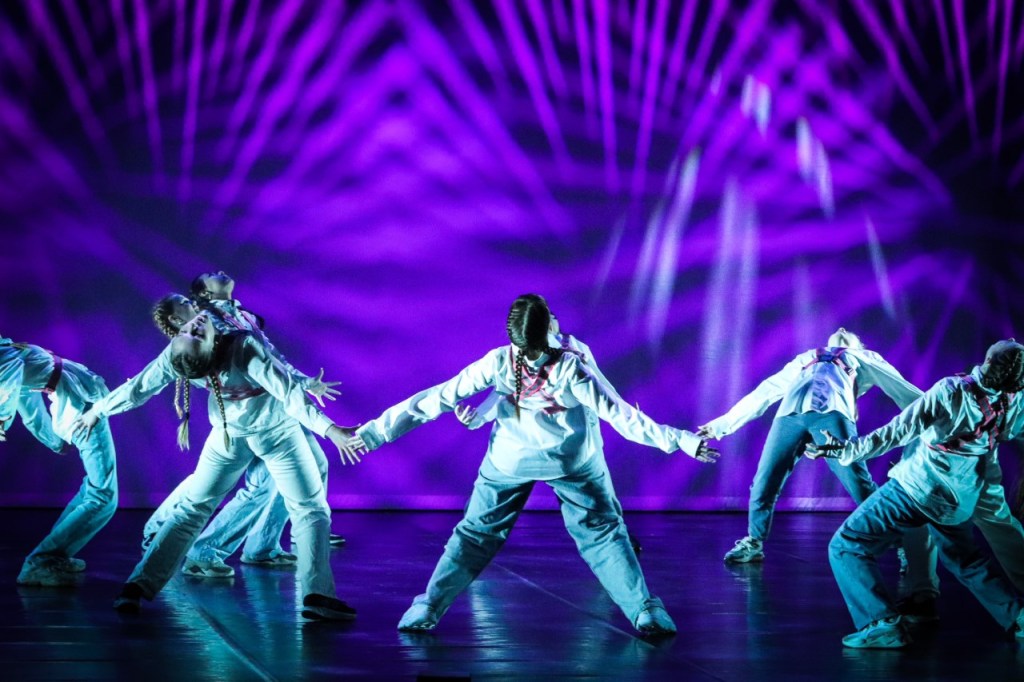
I am a student of MA Creative Events management at Falmouth University. With a background in dance and theatre, I am currently studying to expand my skill sets and learn more about how to create and manage inspiring events that bring people together to share wonderful experiences.

